Its more than 100 days since Indian Prime Minister Modi kickstarted the "Swachh Bharat Abhiyaan" with so much fanfare.
He led the drive in Delhi and and called for a nation-wide movement. He was joined by scores of his ministers, politicians and bureaucrats all wielding
brooms for photo-ops. And demonstrating his flair for the drama, Mr. Modi tagged other prominent Indians aka referral model of Salman bhai in Jai ho!.
Only entity he did not nominated was Municipal Corporation of Delhi which is being run by BJP for past 7-8 years. Isn't great ?
In principle, Focus on sanitation deserves credit. Very admirable, except in his previous job he did little to clean up Gujarat. A state he administered for 13 odd years.
Still, i would have apprecieted it if Modi ji was a tad bit serious in this abhiyaan which every one is going ga ga over. To me, its nothing but a hype machine to create a positive image.
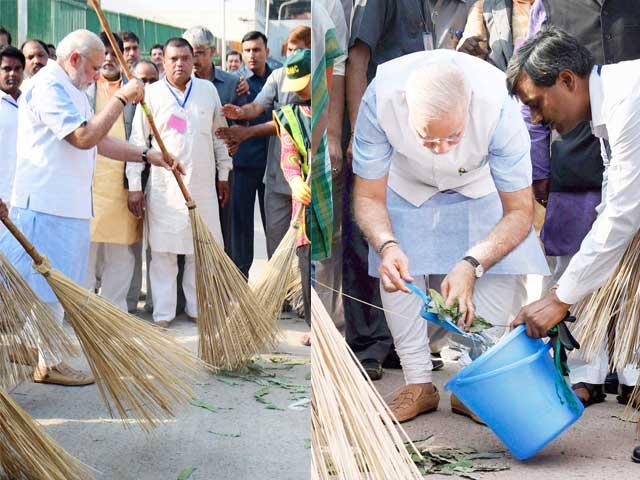 Delhi has to be the only city in the world where green leaves fall off trees & need to be swept away.
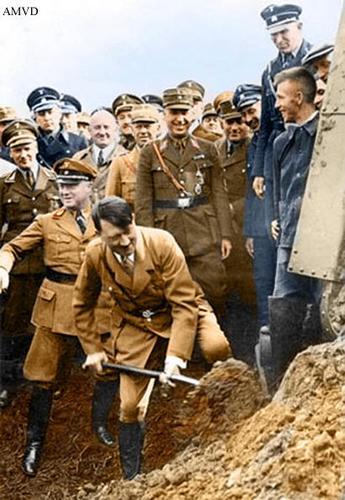 Yes, this happened too... :D
Issue of sanitation in India can be discussed from two perspectives, Urban governance (municipalities) and behaviour.
Urban governance is a mess in India. Municipal bodies are struggling to deliver basic public services. Our cities are polluted and filthy. Take Delhi for instance. One third of its sewage goes to yamuna untreated. Sewage Treatment Plants in Delhi are simply unable to cope with its millions of people. On similar lines, landfill sites in Delhi are running full with MCD and DDA struggling to build new ones.
And then there are slums and what are known as unauthorized colonies–surviving in the legal limbo where they are illegal on paper. These colonies which house 4 million people have virtually no sewage lines or other municipal services because of their legal status.
And this is the state of affairs in our capital city. Less said about other cities particularly in large states like UP—Kanpur for instance is so dangerously polluted that inhabiting it is an automatic health hazard. In summary, Indian cities are inhospitable–vastly overpopulated and underserved, it would require substantial investments to revitalize them.
The second aspect of the sanitation challenge is behavioral. From Naipaul who noted with disgust how Indians like to shit everywhere to commenators lamenting how Indians litter their surrounding much has been said about India’s sanitation habits. And by attempting to make the Swachh Bharat campaign a national movement, it is this behavior Mr. Modi is attempting to change. It is an unexceptional call.
However, it runs into two problems. First, as previously detailed, even if all the citizens of Delhi change their behavior and stop littering, it would not solve the infrastructural issues which prevents hygiene and cleanliness. Untreated sewage would still flow into Yamuna; the air would remain as polluted; & the inability of municipal authorities to deliver basic services would mean that garbage dumps would soon overflow. Without massive government investments in improving municipal services as well its proper pricing to ensure adequate resources, there is little likelihood of campaigns like Swachh Bharat to make a meaningful impact on the ground.
Second, it is exceedingly hard—if not impossible–to bring a behavior change, at the society level because the essential premise of social transactions is reciprocity. Why does everyone in India honk? Because everyone else does! Why do people in India routinely break traffic laws? Because there is no benefit in standing on a red light while everyone else is merrily jumping it. And that is exactly why when Indians move to more law-abiding countries, they are instantly transformed into model citizens.
Therefore, unless everyone in Delhi—or at least a vast majority—instantly stop littering their surroundings at that particular moment, there is little incentive for an individual to do so. And even if an individual is so inclined either due to a heightened sense of civic duty or inspired by Mr. Modi’s campaign, it is unlikely to have a meaningful impact. Indeed, even that individual would soon join the common consensus having been left thoroughly frustrated.
In conclusion, while no one can disagree with call to clean India, but its not possible without making big investments in urban infrastructure, solving the issues of municipalities and then launching a campaign like Swachh Bharat for the recalcitrant ones. Even after 100 days, there is no talks of solid waste management policy or any infrastructure changes. Modi ji is still happily sharing photo-ops of grooms with brooms. So all this is nothing but a farce. India wont be clean with this abhiyaan and it will our fault now that we did not do our bit.
P.S A fascinating example of behaviour change phenomenon is Delhi Metro. It is rare to see the spits marks or litter. Why? Because when the system was introduced in 2002, it was spanking clean and there was high level of emphasis on maintenance. Even those who are disinclined to mind their surrounding felt the pangs of social sanction. However, unless the streets of Delhi can similarly be magically transformed tomorrow, there is little likelihood of similar transformation in Delhi or other major cities.
I did not touched upon rural focused awareness and monetary help part of the program which is a rehash of Nirmal Bharat Abhiyan. Interesting enough, here Manmohan Singh is beating Narendra Modi hollow.